NANUK 955 and 960 Protective Cases
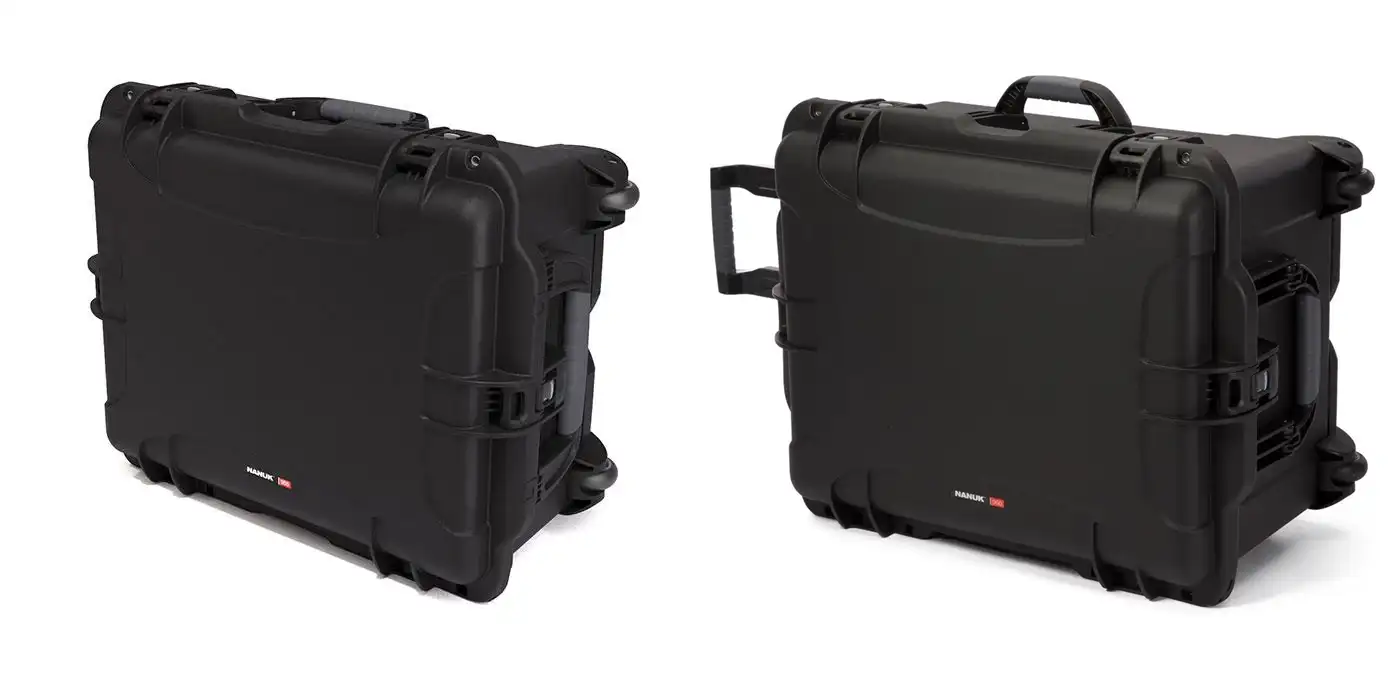
Presentation of the NANUK 955 and 960 cases
The NANUK 955 and 960 are wheeled protective cases for heavy and bulky professional equipment. They share the same footprint, with an internal length and width of 559 mm x 432 mm. The usable depth is 259 mm on the NANUK 955 (62.5 litres) and 328 mm on the NANUK 960 (79 litres). The shared footprint lets you choose the depth that best fits your kit without changing the floor space required.
The NANUK 955 targets large but limited-height sets, such as video kits, audio configurations, instrumentation or compact IT equipment, while the NANUK 960 addresses systems requiring more height: foam trays, rows of accessories, wiring and power supply spread over several levels. In both cases, the roller chassis, telescopic handle and flexible grips allow a single operator to move a large volume of equipment over long distances, in internal logistics, in the field or on intersite travel.
Technical specifications of the NANUK 955 and 960
The NANUK 955 and 960 cases use a thick-walled NK-7 resin shell with reinforced corners and peripheral ribs. The lid and the case base are maintained by a continuous perimeter seal, which ensures protection against water, dust and projections in the external or industrial environment. Automatic depressurizing valve manages pressure variations related to air transport or rapid changes in altitude while maintaining enclosure sealing.
Both models incorporate a wheeled base with polyurethane wheels and retractable telescopic handle, complemented by three flexible grip handles for hand handling. The PowerClaw type locking system mechanically locks the lid on the case base, while the padlock points allow the addition of conventional locks or TSA-approved locks for transport in hold or storage in shared areas. The main difference between 955 and 960 lies in the useful depth: 955 limits the content height for lower and dense assemblies, when 960 allows larger multi-level configurations.
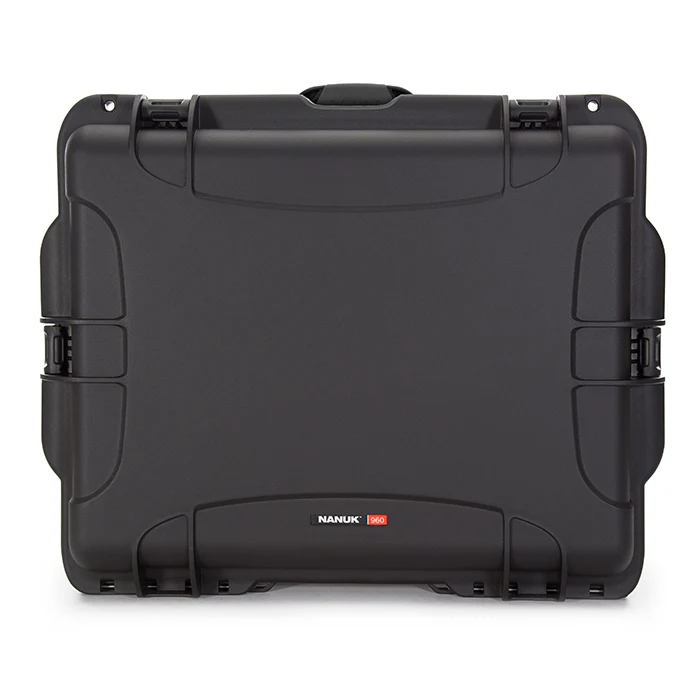
The NANUK 955 and 960 share the same chassis base, with a large case base and an identical ground surface. On this common footprint, the NANUK 955 offers a useful height of 259 mm (62.5 litres) for dense but relatively low kits, while the NANUK 960 brings the height to 328 mm (79 litres) to accommodate larger equipment or several levels of foam and accessories without compromising mechanical protection.
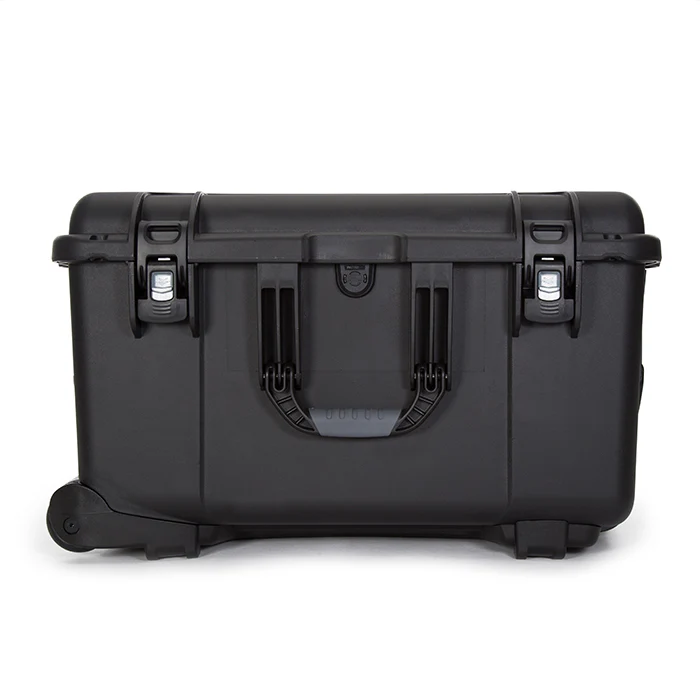
The PowerClaw system mechanically locks the lids of the NANUK 955 and 960 and limits unwanted openings. The latches exert constant pressure on the perimeter seal to maintain the seal, even in the event of shocks or vibrations. The padlock points provided in the shell accept standard locks or TSA-approved locks, making it easier to use in aircraft hold or in environments where several teams handle cases.
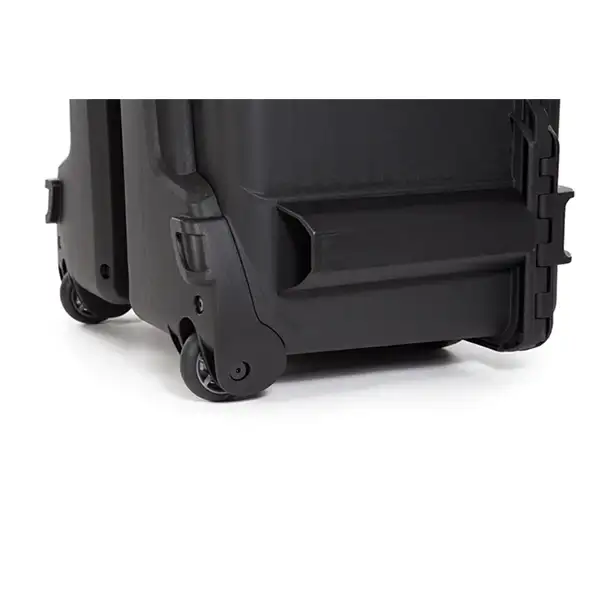
The polyurethane wheels and retractable telescopic handle of the NANUK 955 and 960 are dimensioned for heavy loads frequently displaced. The wheels remain stable on irregular coatings and ensure smooth running, while the telescopic one-hand handle allows to guide the case between the vehicle, the transit areas and the intervention station. This configuration reduces the fatigue of the operator when the same kit has to be moved regularly over long distances.
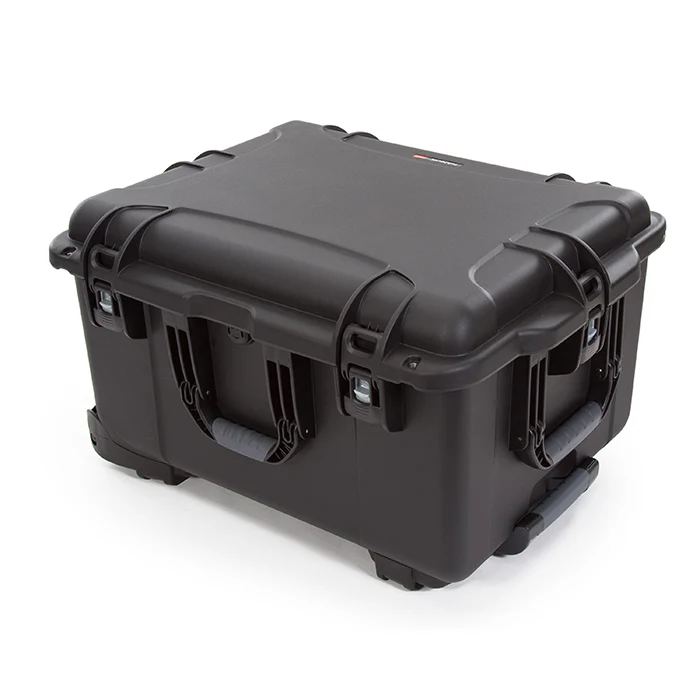
The three flexible grips and stainless steel hardware facilitate manual handling of cases 955 and 960. Handles are integrated into the shell to limit the risk of hanging during storage or transport, while stainless steel hardware supports repeated loading stresses in a vehicle, on a dock or in internal logistics. The two models thus maintain a coherent ergonomics, whether the case base depth of the 955 or the 960 is chosen.
Dimensions and volumes
- NANUK 955
- Internal dimensions NANUK 955 (L x W x H): 559 mm x 432 mm x 259 mm (22 in x 17 in x 10.2 inches)
- External dimensions NANUK 955 (L x W x H): 650 mm x 508 mm x 300 mm (25.6 in x 20 in x 11.8 inches)
- Internal volume NANUK 955: 62.5 litres
- NANUK 960
- Internal dimensions NANUK 960 (L x W x H): 559 mm x 432 mm x 328 mm (22 in x 17 in x 12.9 inches)
- External dimensions NANUK 960 (L x W x H): 645 mm x 508 mm x 368 mm (25.4 in x 20 in x 14.5 inches)
- Internal volume NANUK 960: 79 litres
Interiors available for the NANUK 955 and 960
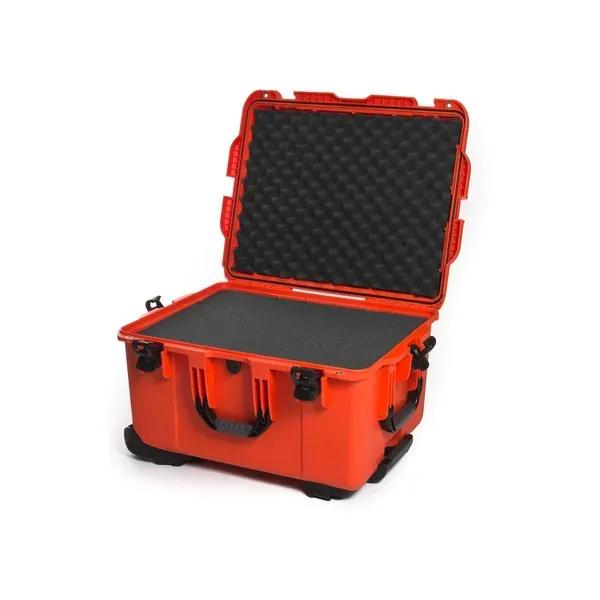
Versions with foam
In foam versions, the NANUK 955 and 960 receive pre-cut or cubic blocks to create prints suitable for the equipment. The 955 is suitable for dense but height-limited configurations: camera with optics, recorders, electronic modules, tools or instrumentation grouped on one or two levels. The 960, deeper, allows the overlapping of several layers of foam to separate functions (sighting, power supply, accessories, cables) while maintaining a sufficient thickness of protection above and below critical elements.
Versions with padded dividers
With upholstered dividers, the NANUK 955 and 960 offer a flexible organization adapted to frequent configuration changes. The partitions fixed by self-adhesive bands allow to quickly adjust the size and position of the compartments. On 955, this solution targets already structured but lower sets, while the 960 allows to distribute the material on a larger height: complete video equipment, multi-module instrumentation, network equipment and their power supplies, or response kits distributed by functional zones.
Dedicated inserts and specific integrations
Both models can accommodate dedicated inserts or custom panels: trays for photo or video equipment, instrumentation supports, on-board electronic inserts or control interfaces. The integrated bezel system allows mounting panels without piercing of the shell, which keeps the seal while providing accessible connection points from the opening. The NANUK 955 will be suitable when only one stage of components is sufficient, while the NANUK 960 will be preferred for higher integrations or multi-level architectures.
NANUK 955 models available
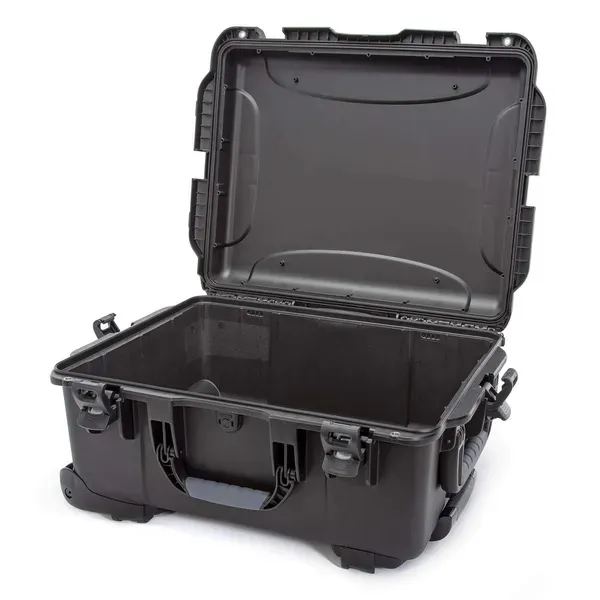
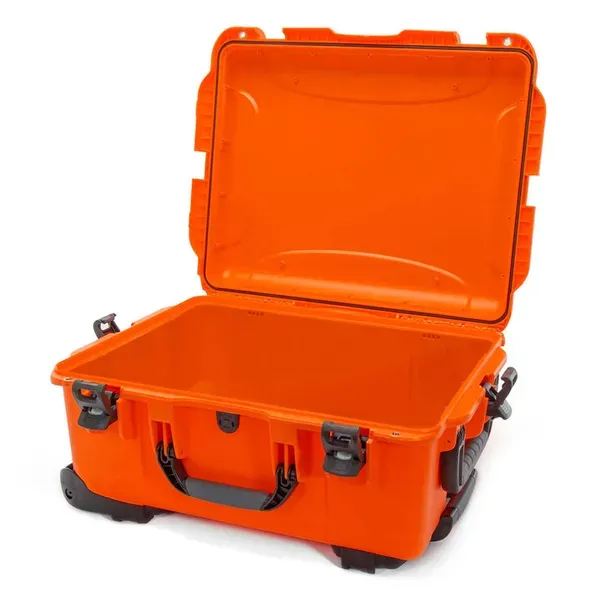
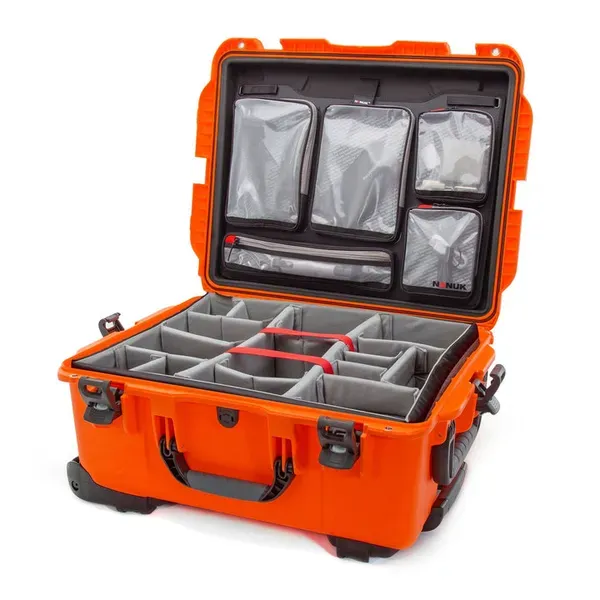
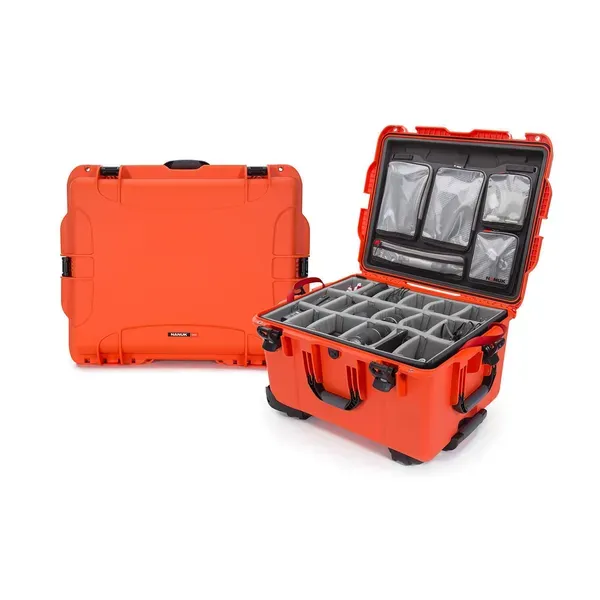
The NANUK 955 model is available in several variants combining shell colour and interior type. The configurations below present the empty versions, with standard foam, with padded dividers and with photo kit dividers, in black and orange versions, in order to cover the main professional uses while maintaining a coherent range structure.
NANUK 955 multi-purpose vacuums
NANUK 955 Cases with standard foam
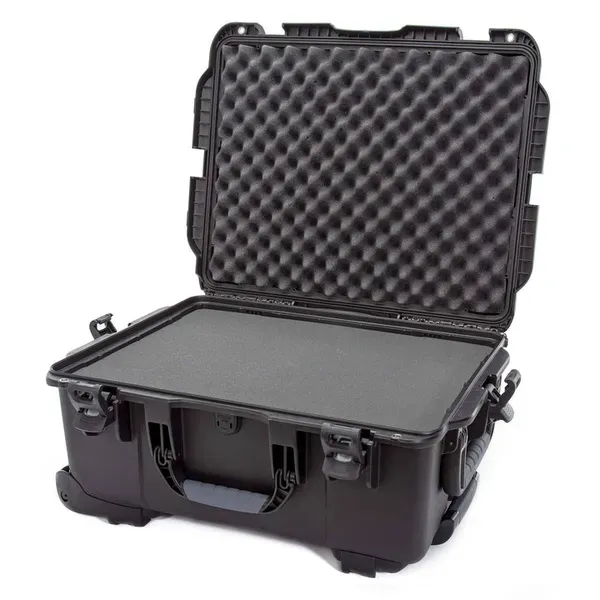
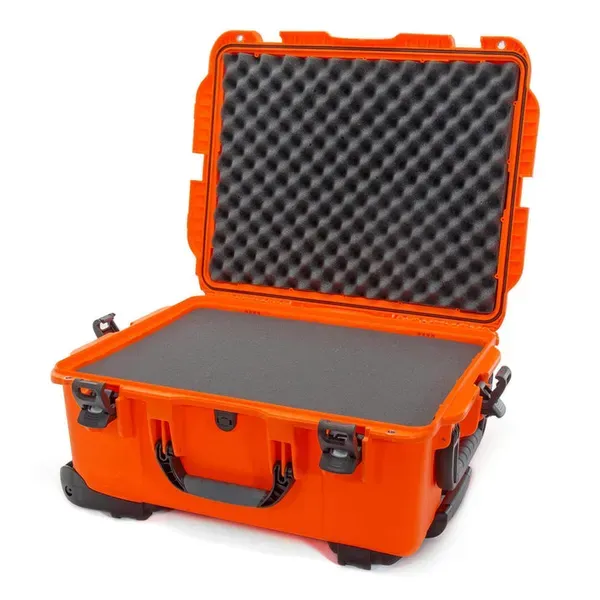
NANUK 955 Cases with standard dividers
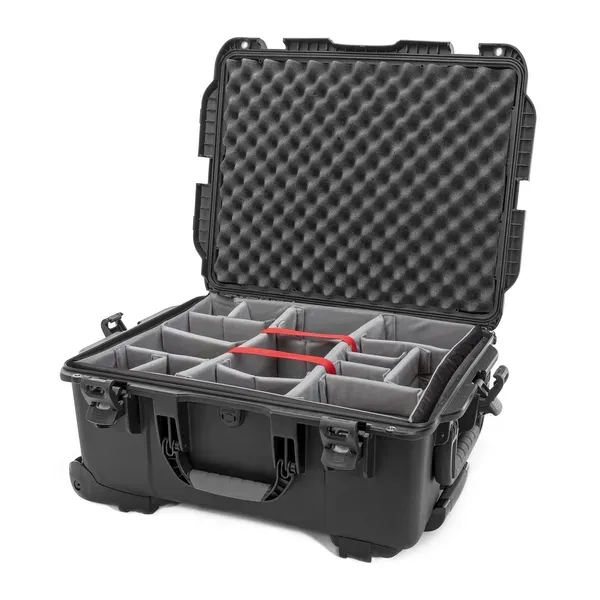
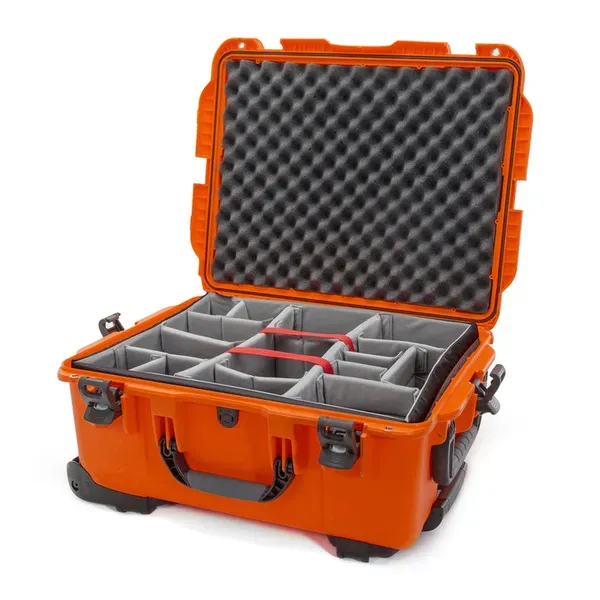
NANUK 955 Cases with photo kit dividers
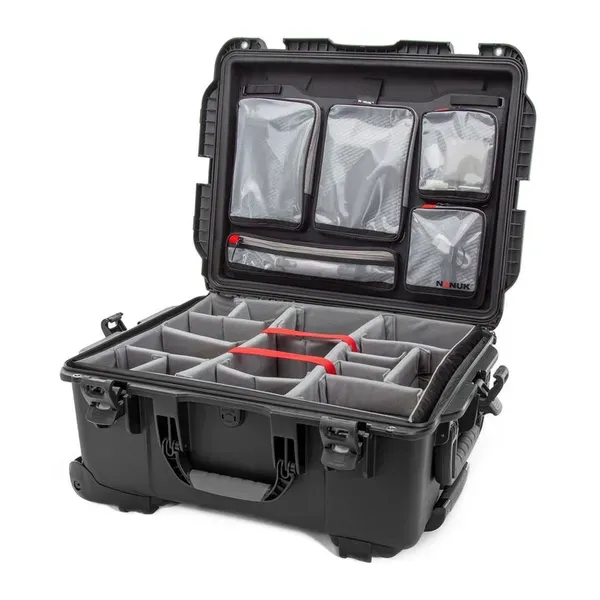
NANUK 960 models available
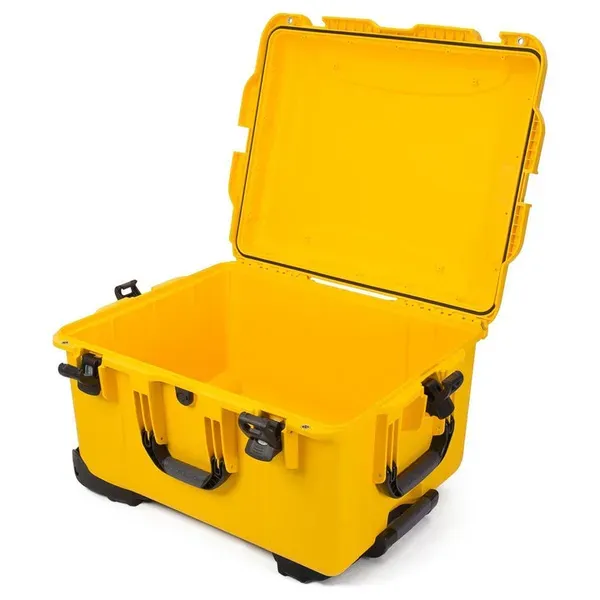
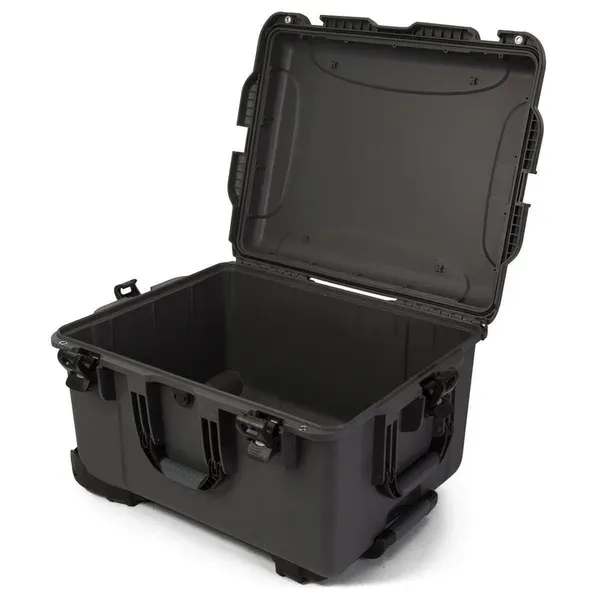
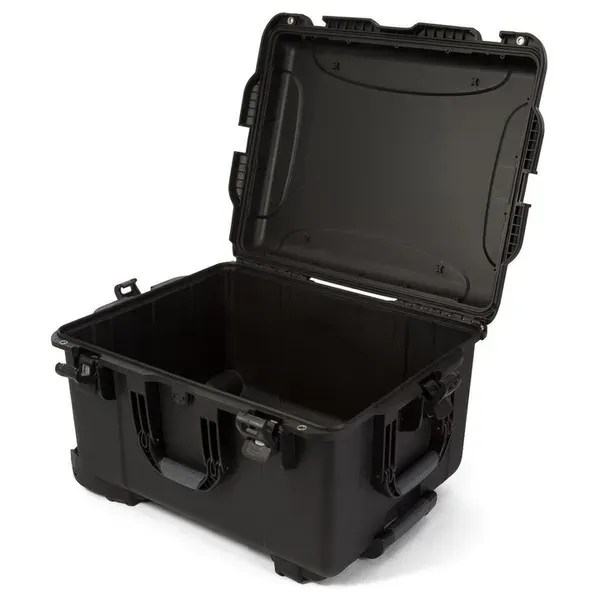
The list below lists the main variants NANUK 960 currently referenced in the catalogue, combining shell colour and interior type. The NANUK 955 configurations follow a similar logic (colours, empty interiors, foam, dividers, photo kit dividers) and can be added with dedicated references and visuals according to the evolution of the offer.
NANUK 960 polyvalent empty cases
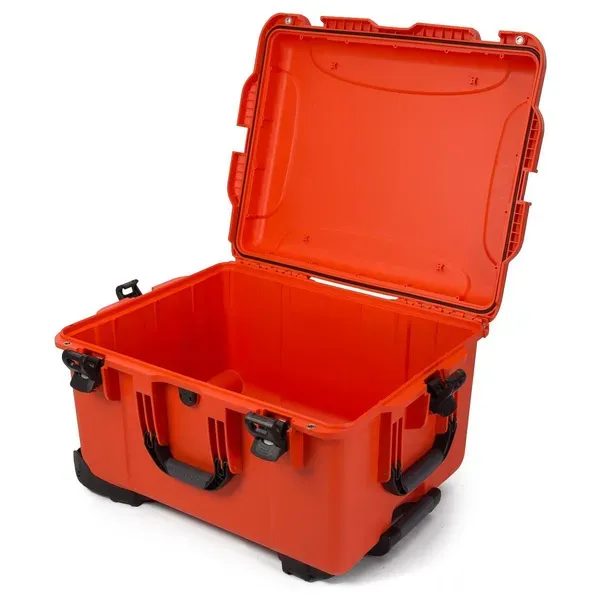
NANUK 960 Cases with standard foam
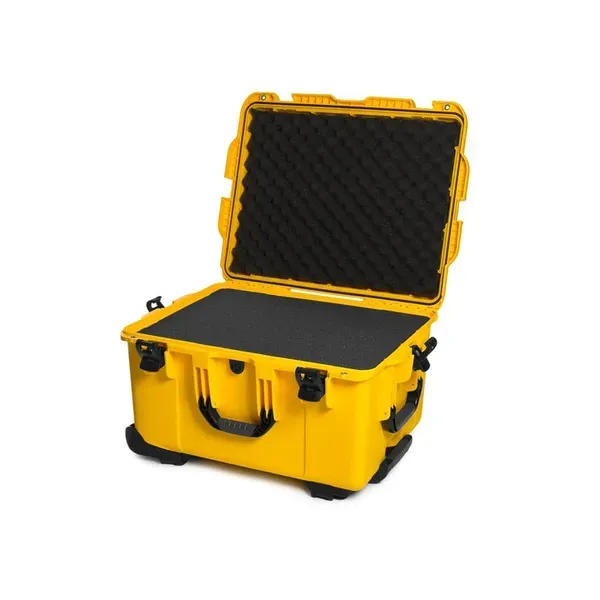
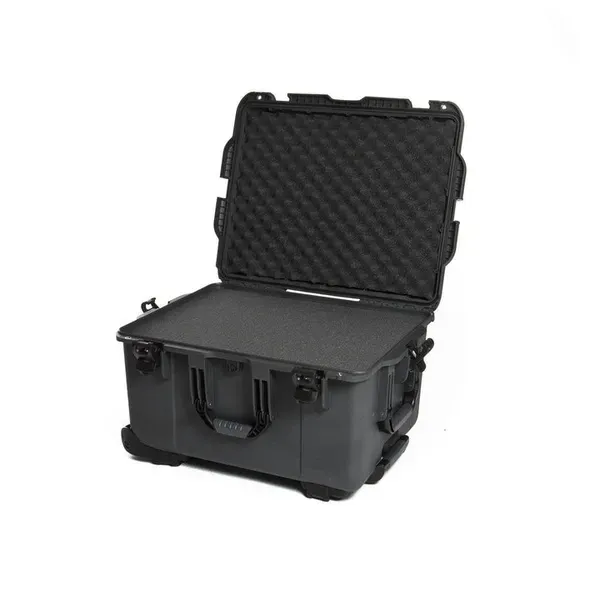
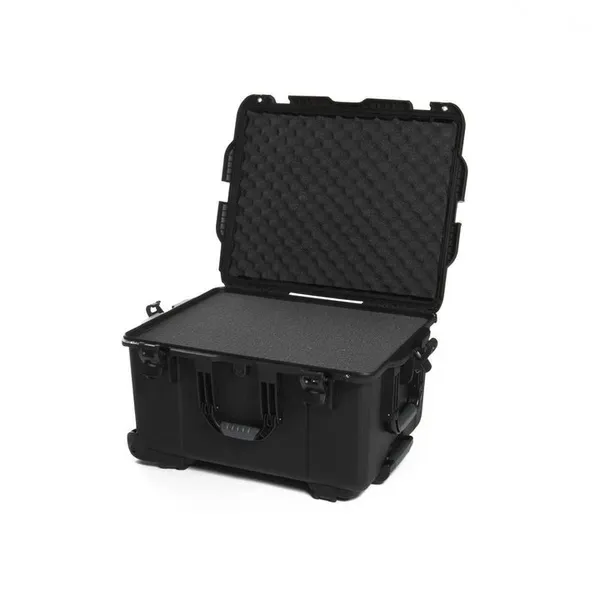
NANUK 960 Cases with standard dividers
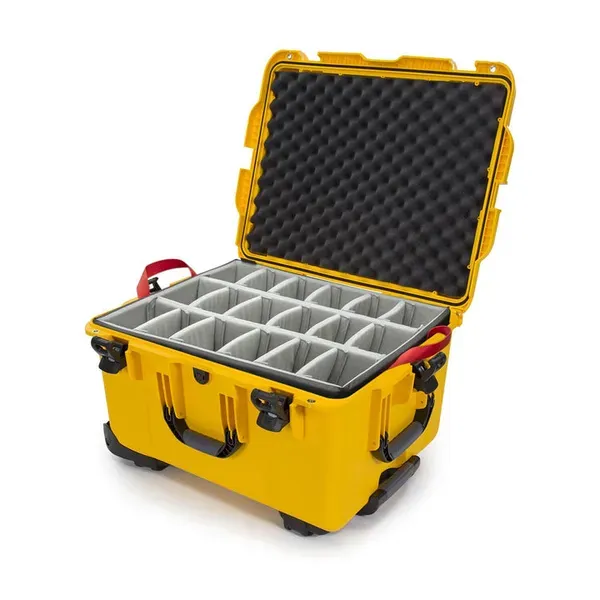
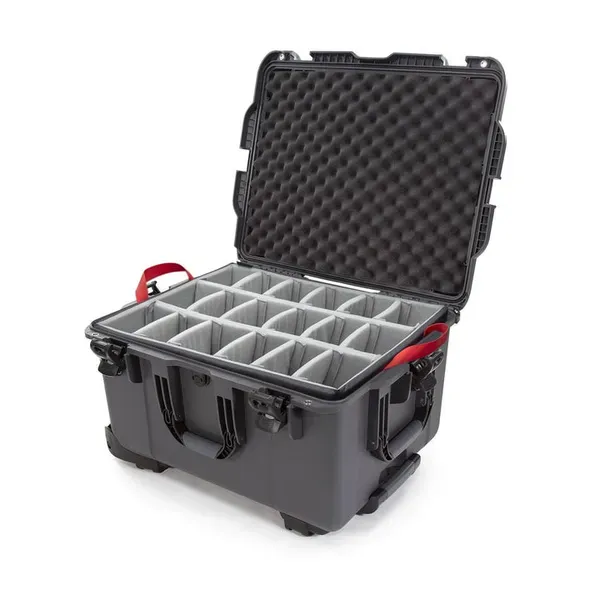
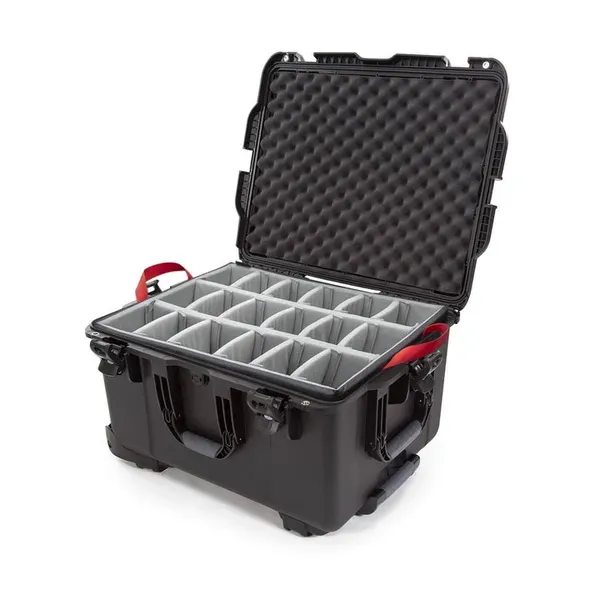
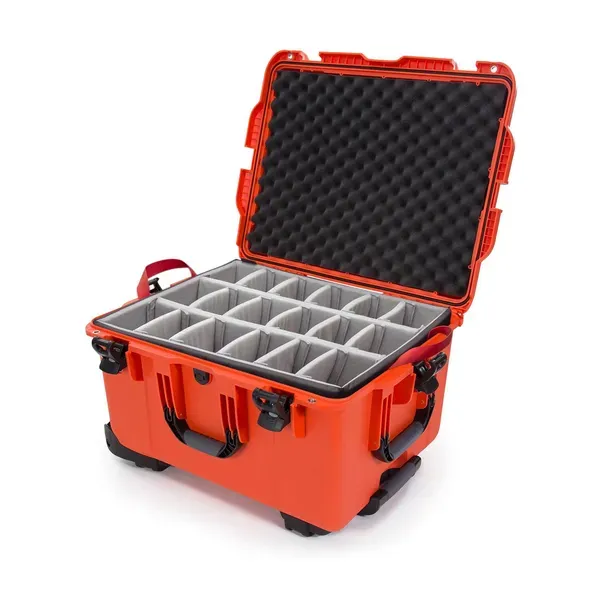
NANUK 960 Cases with photo kit dividers
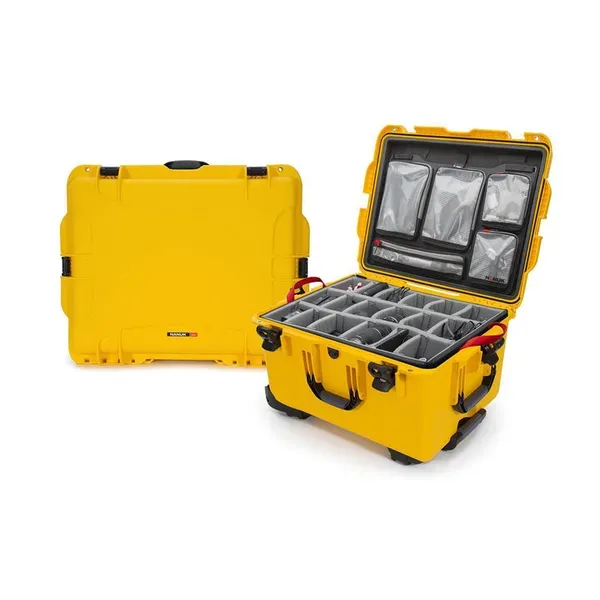
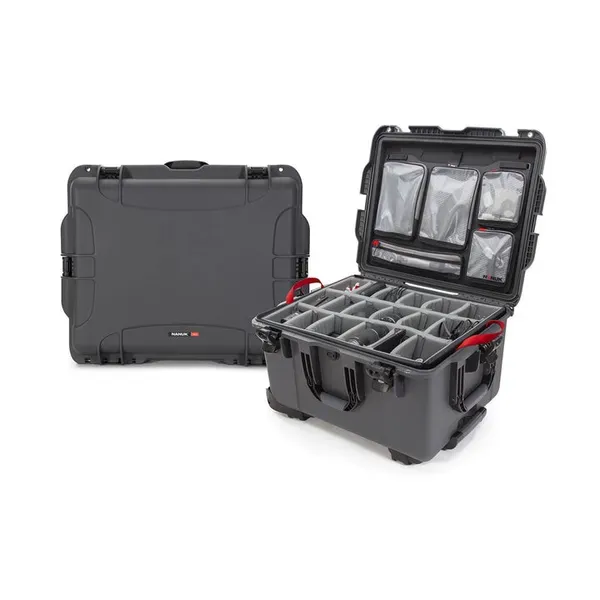
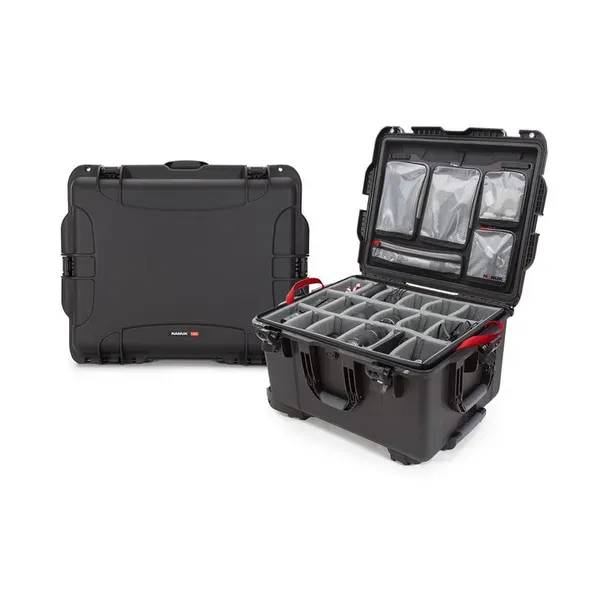
Accessories compatible with NANUK 955 and 960
The NANUK 955 and 960 cases can be supplemented with various accessories to adapt safety, moisture management and system integration. TSA-approved locks and lock modernization kits enhance protection in transport, including aircraft or shared logistics circuits. Waterproof panel kits enable embedded interfaces, connectors or electronics to be integrated without compromising the sealing of the shell, while silica gel cartridges help to limit the effects of moisture on sensitive optics, sensors and components.
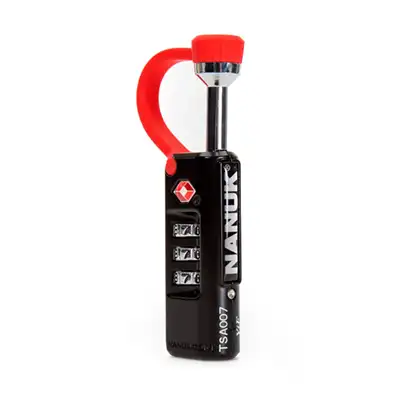
The TSA-approved padlock secures 955 and 960 cases while remaining compatible with baggage checks. It is recommended when cases travel in hold or transit in environments under inspection, while maintaining controlled access to content for the end user.
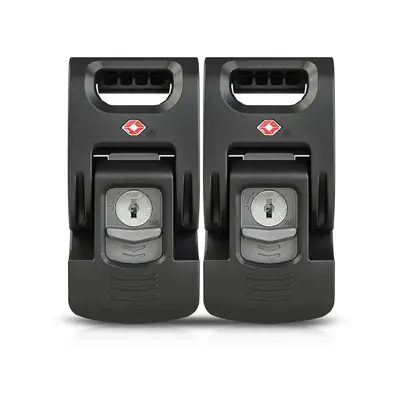
The TSA lock modernization kit replaces standard closures with a version compatible with aviation security controls. It allows the adaptation of NANUK 955 or 960 cases already in service for regular use in international transport, without calling into question the rest of the internal configuration or associated accessories.
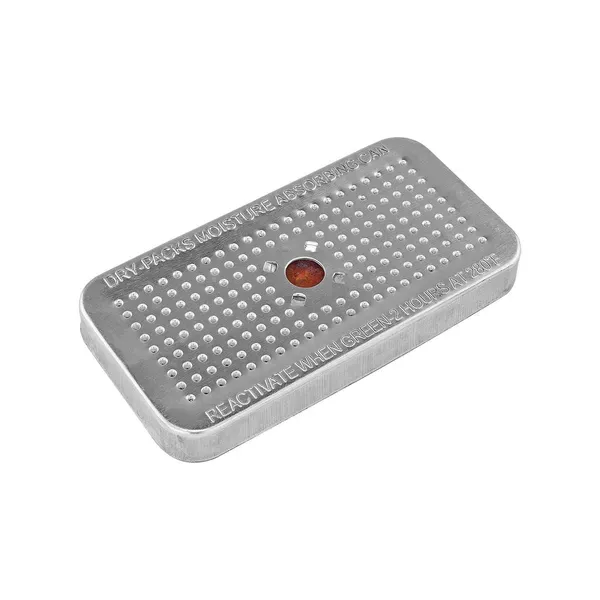
Reusable silica gel cartridge helps to limit moisture and condensation inside the case. Placed in a NANUK 955 or 960 near optics, sensors or electronic cards, it reduces the risk of corrosion, mould and degradation of sensitive surfaces, especially during prolonged storage in humid environments or in non-air-conditioned warehouses.
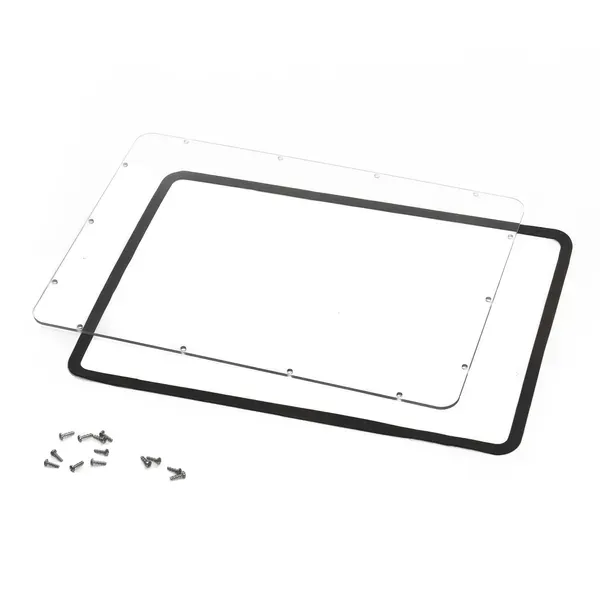
Waterproof polycarbonate or aluminium panel kits facilitate the integration of systems into luggage cases 955 and 960. They allow to install connectors, control interfaces or electronic modules while maintaining the seal of the case, whether the case is used as a measuring station, communication module or transportable system base: waterproof polycarbonate panel kit and waterproof aluminium panel kit.
Recommended compatibility and use
By their common internal dimensions of 559 mm x 432 mm, the NANUK 955 and 960 target complete kits rather than isolated accessory sets. The 955, with 259 mm of useful height, is suitable for dense but relatively low configurations: camera rigs with compact optics and accessories, audio systems, instrumentation, computer sets or network condensed on one or two levels. The 960, with 328 mm of useful height, allows to add additional trays, large modules or cables and power supplies spread over several floors without sacrificing the protective thickness.
For technical services, video teams or IT providers, the NANUK 955 offers a roller-mounted solution for heavy kits whose height must be kept in place, while the NANUK 960 becomes relevant as soon as the configuration imposes higher elements or the superimposition of several layers of equipment. In both cases, the rigid shell combination, sealing, polyurethane wheels and telescopic handle facilitates repeated movement between vehicle, intervention site and storage areas.
Comparison with other NANUK cases
The NANUK 955 and 960 share the same footprint as some intermediate cases in the range but are distinguished by their roller chassis and useful volume. The 955 offers 62.5 litres for a useful height of 259 mm, while the 960 reaches 79 litres with 328 mm height. They are thus positioned above models such as the NANUK 945 or the NANUK 950, which remain suitable for medium-sized kits or lower configurations, and below larger cases such as the NANUK 965, for even larger loads or systems requiring a very high volume margin.
The choice between 955 and 960 depends mainly on the size profile of the equipment and the mode of transport. When the total height of the kit has to remain controlled (low racks, specific inserts, compact instrumentation), the NANUK 955 is a good compromise. As soon as the configuration imposes higher elements, stacked trays or a volume reserve for future developments, the NANUK 960 becomes the reference, while remaining manipulating by a single operator thanks to the wheels and telescopic handle.
Frequently Asked Questions on NANUK 955 and 960 Bags
For what types of equipment are NANUK 955 and 960 the most suitable?
NANUK 955 and 960 target complete professional sets: camera or video kits with optics and accessories, compact lighting systems, multi-module instrumentation, computer or network equipment, and intervention or medical kits. The 955 is relevant for dense but relatively low configurations, while the 960 is for higher or organised systems on several levels of foam or dividers.
What is the main difference between NANUK 955 and NANUK 960?
Both models share the same internal footprint of 559 mm x 432 mm, but are distinguished by useful height and internal volume. The NANUK 955 offers 259 mm in height and a volume of 62.5 litres, which is suitable for dense and relatively low kits. The NANUK 960 brings the useful height to 328 mm for a volume of 79 litres, allowing to overlay more foam, accessories or modules without compromising the mechanical protection or ergonomics of rolling.
Are the NANUK 955 and 960 suitable for air transport and difficult environments?
The NANUK 955 and 960 use a NK-7 resin shell, a continuous perimeter seal and a PowerClaw locking system, complemented by an automatic pressure-equalisation valve. This combination provides protection against shocks, dust, moisture and pressure variations related to air transport. In practice, their template is most often intended for use in bunkers or field logistics, with addition of TSA locks or padlocks when the security level requires it.
Should we choose an empty version, with foam or with dividers for these models?
An empty version is intended for integrators or users who provide a specific setting solution. Foam versions are suitable for stable configurations over time, such as a video kit or a defined instrumentation, while padded dividers provide a flexible organization when content changes frequently. The logic is the same for the NANUK 955 and 960, the difference being mainly about the case base height and the ability to overlay several levels of equipment.
What accessories are recommended with the NANUK 955 and 960?
The most common accessories are TSA-approved locks and lock kits for air transport, polycarbonate or aluminium waterproof panel kits for system integration, and silica gel cartridges to limit internal humidity. Depending on the use, these elements add safety, improve ergonomics or transform the case into a transportable system base while maintaining mechanical protection and sealing.